Topic: The Immutable Triad and the Separation of Powers
Need Official Legal Templates or Documents?
Access attorney-reviewed, fully editable Word (.docx) contracts and printable PDF guides formatted for immediate legal protection.
- ✓ Fully Editable: Includes Word (.docx) & printable PDF
- ✓ Key Clauses: IP transfer, non-solicitation, indemnification & remedies
- ✓ Practitioner Guide: Includes line-by-line filling instructions
Select the specific document below that best fits your requirements:
Table of Contents
Delving into the concept of the Immutable Triad reveals the foundational principle upon which democratic governance stands: the separation of powers. This legal and historical analysis aims to explore the origins, significance, and enduring relevance of the separation of powers doctrine in democratic societies. Dating back to the Enlightenment era and championed by political philosophers such as Montesquieu, the separation of powers serves as a cornerstone of modern constitutional systems, ensuring a system of checks and balances among the executive, legislative, and judicial branches of government.
This analysis is part of our comprehensive reference guide on Constitutional Law.
By examining its historical evolution, theoretical underpinnings, and practical applications, this analysis seeks to illuminate the vital role of the separation of powers in safeguarding against tyranny, promoting accountability, and preserving the rule of law.
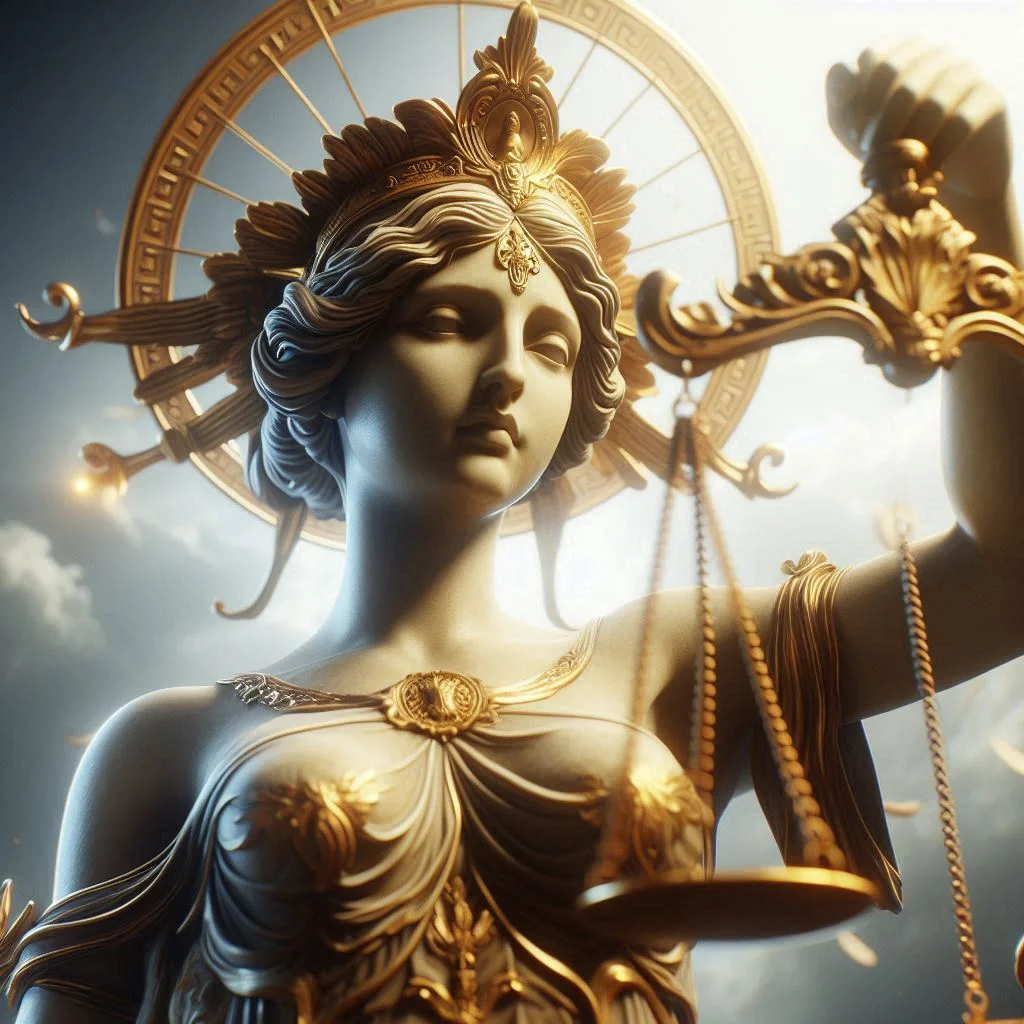
The concept of the separation of powers stands as an enduring testament to the essence of democratic governance, embodying the idea that no single authority should wield unchecked control. Rooted in the philosophical musings of luminaries such as Montesquieu and bolstered by legal doctrines, the separation of powers is the bedrock of modern democracies.
I. Historical and Philosophical Underpinnings:
A. Montesquieu’s Enlightenment Ideals:
The notion of the separation of powers finds its roots in the enlightenment philosophy of Charles-Louis de Secondat, Baron de La Brède et de Montesquieu. His seminal work, “The Spirit of the Laws” (1748), profoundly influenced political thought and governance structures. Montesquieu advocated for a clear division of powers to prevent tyranny, stating, “When the legislative and executive powers are united in the same person or body, there can be no liberty.”
B. John Locke’s Influence:
John Locke, another influential enlightenment thinker, contended that the separation of powers is essential for safeguarding individual liberties. In his “Second Treatise of Government” (1689), Locke asserted, “The legislative cannot transfer the power of making laws to any other hands. … And when the people have said, ‘We will submit to rules and be governed by laws made by such men and in such forms,’ nobody else can say other men shall make laws for them.”
II. Legal Foundations:
A. Constitutional Safeguards:
In the United States, the separation of powers is enshrined in the Constitution. The framers, influenced by Montesquieu, devised a system where the legislative, executive, and judicial branches operate independently. As James Madison, one of the architects of the U.S. Constitution, wrote in the Federalist Papers, “The accumulation of all powers, legislative, executive, and judiciary, in the same hands, whether of one, a few, or many, and whether hereditary, self-appointed, or elective, may justly be pronounced the very definition of tyranny.”
While the United Kingdom lacks a written constitution, the principles of the separation of powers are embedded in its constitutional framework. The judiciary remains distinct from the executive and legislative branches, ensuring a system of checks and balances.
B. International Recognition:
The Universal Declaration of Human Rights (UDHR) and the International Covenant on Civil and Political Rights (ICCPR) recognize the importance of separation of powers in safeguarding human rights. As stated in the ICCPR, “In the determination of any criminal charge against him, everyone shall be entitled to a fair and public hearing by a competent, independent and impartial tribunal established by law.”
III. The Guardians of Democracy:
A. Legislative Power:
- Law-Making Authority:
The legislative branch holds the power to create laws, providing the foundation for the functioning of a democratic society. As Alexis de Tocqueville noted, “The health of a democratic society may be measured by the quality of functions performed by private citizens.”
- Accountability and Representation:
Through elected representatives, the legislative branch ensures accountability to the electorate. It represents diverse interests and perspectives, fostering inclusivity in the law-making process.
B. Executive Power:
- Implementation and Administration:
The executive branch executes and enforces laws, translating legislative intent into practical governance. As Sir William Blackstone remarked, “The king is a political and not just a natural person, he has power to do nothing but that which is allowed him by law.”
- Stability and Decision-Making:
A strong executive ensures swift decision-making, essential for effective governance. However, checks and balances are crucial to prevent abuse of power, as emphasized by Lord Acton’s famous dictum, “Power tends to corrupt, and absolute power corrupts absolutely.”
C. Judicial Power:
- Adjudication and Interpretation:
The judiciary interprets laws and adjudicates disputes, ensuring the rule of law prevails. As Lord Hewart said, “Justice should not only be done but should manifestly and undoubtedly be seen to be done.”
- Protection of Rights:
By upholding constitutional principles, the judiciary serves as a bulwark against encroachments on individual rights. As Justice Felix Frankfurter noted, “In the last analysis, our only freedom is the freedom to discipline ourselves.”
IV. The Dynamics of Checks and Balances:
A. Interplay Between Branches:
The separation of powers fosters a delicate equilibrium through checks and balances. The branches act as mutual constraints, preventing one from dominating the others. This interplay is fundamental for democratic stability.
B. Preventing Tyranny:
By dispersing power, the separation of powers acts as a safeguard against the concentration of authority, echoing the sentiments of John Adams: “There is danger from all men. The only maxim of a free government ought to be to trust no man living with power to endanger the public liberty.”
V. Contemporary Challenges and Adaptations:
A. Evolving Role of Government:
In the face of evolving societal challenges, the role of government has expanded. The digital age and global interconnectivity demand a nuanced approach to the traditional separation of powers, prompting legal scholars to explore adaptive models that preserve democratic values.
B. Judicial Activism:
While judicial activism plays a vital role in protecting rights, concerns arise when courts overstep their bounds. Striking the right balance is imperative, as articulated by Justice Thurgood Marshall, “Where you see wrong or inequality or injustice, speak out, because this is your country. This is your democracy.”
In the realm of democratic governance, the separation of powers emerges as the linchpin, weaving together the philosophical ideals of enlightenment thinkers with legal doctrines that underpin modern constitutions. Through a harmonious interplay of legislative, executive, and judicial powers, a robust system of checks and balances evolves, fortifying the edifice of democracy. As Montesquieu envisioned, “Political liberty is to be found only when there is no abuse of power.” The separation of powers stands resolute, ensuring that liberty endures, and the flame of democracy continues to illuminate the corridors of justice and governance.
Daily Quiz
Criminal Procedure
10 questions, new every day. See how many you get right — then come back tomorrow for a new category.
Question 1 of 10
What is the "inevitable discovery" doctrine?
Inevitable discovery is a narrow exception to the exclusionary rule — if the prosecution can show the evidence would have been found anyway through an independent, lawful investigative path, it may still be admitted.
Question 2 of 10
What did Brady v. Maryland (1963) establish regarding a prosecutor's disclosure obligations?
Brady established that suppressing evidence favorable to the defense and material to guilt or punishment violates due process — a foundational disclosure obligation prosecutors must satisfy regardless of good or bad faith.
Question 3 of 10
What do "stop and identify" statutes, where they exist, generally require?
Some, but not all, states have stop-and-identify laws requiring a person who has been lawfully stopped based on reasonable suspicion to provide identifying information — these statutes vary significantly, and some states have none at all.
Question 4 of 10
What is a grand jury's role?
A grand jury doesn't decide guilt — its job is to review the prosecution's evidence and decide whether probable cause exists to issue an indictment, moving the case forward to trial.
Question 5 of 10
What is the "public safety exception" to Miranda?
This narrow exception recognizes that in a genuine, immediate public-safety emergency (like locating a hidden weapon), officers can ask limited necessary questions before Mirandizing a suspect, without automatically losing the ability to use the answers.
Question 6 of 10
At what point does a criminal defendant's Sixth Amendment right to counsel generally "attach"?
The Sixth Amendment right to counsel is tied to the start of formal criminal proceedings, not simply the commission of a crime or an initial arrest — this is a distinct question from the separate Miranda right to counsel during custodial interrogation.
Question 7 of 10
What is the general legal basis for the "border search exception"?
Routine border searches are treated differently from ordinary domestic searches — the government's sovereign interest in controlling entry generally allows more latitude to search persons and property at the border without the usual warrant or probable cause requirements.
Question 8 of 10
What is the "automobile exception" to the warrant requirement?
Courts have recognized that a vehicle's ready mobility (it could simply be driven away while police wait for a warrant) justifies a warrant exception when officers have probable cause to believe it contains evidence of a crime.
Question 9 of 10
What is the basic difference between "probation" and "parole"?
Probation generally lets a convicted person avoid prison altogether, serving their sentence under supervision in the community instead. Parole is different — it is supervised release granted to someone after they have already served part of an actual prison sentence.
Question 10 of 10
What is the "entrapment" defense?
Entrapment focuses on whether the government's own conduct created the crime — merely providing an opportunity to someone already willing to commit the offense is not entrapment, but inducing an unwilling person to do so can be.
Come back tomorrow for Constitutional Law.
Enjoyed Criminal Procedure? Go deeper:
Continue with the Criminal Procedure course → See the Law Enforcement course too →A quick trivia game for general legal knowledge — not legal advice, and not affiliated with any bar exam or licensing body.
Related in Constitutional Law
The information provided in this article ("The Immutable Triad: Separation of Powers as the Keystone of Democratic Governance") is for general educational and informational purposes only and does not constitute formal legal advice. Reading this content does not create an attorney-client relationship. Laws vary by jurisdiction; consult a licensed attorney for specific legal matters.

Teaching? Share this with your class
Free to use in class. Students need no account for the free articles.
Advance Your Legal Analysis
Explore our interactive decision trees, litigation pipeline builders, and procedural court simulators designed specifically for law students and practitioners.
Access Interactive Tools →
0 Comments