Table of Contents
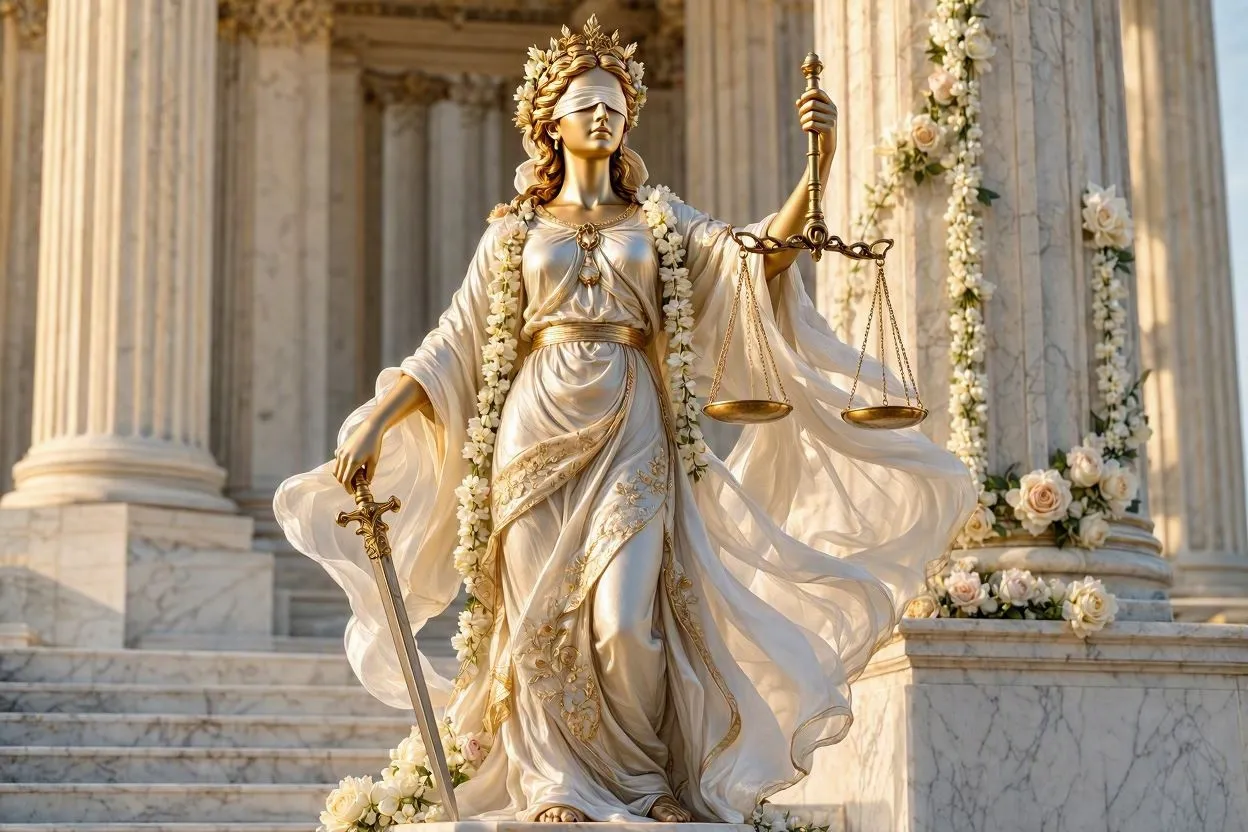
Equality, Caste, Reservation, and Affirmative Action in India: Constitutional Guarantees and Social Justice
Need Official Legal Templates or Documents?
Access attorney-reviewed, fully editable Word (.docx) contracts and printable PDF guides formatted for immediate legal protection.
- ✓ Fully Editable: Includes Word (.docx) & printable PDF
- ✓ Key Clauses: IP transfer, non-solicitation, indemnification & remedies
- ✓ Practitioner Guide: Includes line-by-line filling instructions
Select the specific document below that best fits your requirements:
Introduction
Equality is one of the central principles of the Constitution of India, but its constitutional meaning extends beyond the requirement that the State treat every person identically. The Constitution recognises that Indian society has been shaped by deeply rooted inequalities, including caste-based exclusion, untouchability, social discrimination, unequal access to education, and barriers to economic and political participation. Consequently, the constitutional commitment to equality includes both the prohibition of discrimination and the possibility of measures designed to overcome historical disadvantage.
This analysis is part of our comprehensive reference guide on Constitutional Law.
The Indian constitutional framework addresses these issues through several interconnected provisions. Articles 14, 15, and 16 establish guarantees of equality and prohibit specified forms of discrimination. Article 17 abolishes untouchability. Articles 15(4), 15(5), 15(6), 16(4), 16(4A), 16(4B), and 16(6) permit particular forms of affirmative action and reservation. Articles 330 and 332 provide for reserved representation for Scheduled Castes and Scheduled Tribes in the Lok Sabha and State Legislative Assemblies, while other provisions establish constitutional institutions and procedures for identifying and protecting disadvantaged communities.
The constitutional approach reflects an important distinction between formal equality and substantive equality. Formal equality requires that people be treated according to the same legal standards, without arbitrary discrimination. Substantive equality recognises that identical treatment may preserve existing disadvantage where individuals or communities begin from profoundly unequal social positions. In appropriate circumstances, therefore, equality may require targeted measures that improve access to education, employment, political representation, and public institutions.
Reservation is one of the most visible instruments of this approach, but it is not the entirety of Indian affirmative-action law. The constitutional framework also supports educational advancement, protective legislation, anti-discrimination measures, legal remedies, welfare programmes, institutional representation, and safeguards against exploitation.
The subject is legally complex. The Constitution does not establish one universal reservation system applying identically to every institution or category. Different provisions govern education, public employment, legislative representation, and the recognition of particular disadvantaged communities. Their operation is also shaped by parliamentary and State legislation, constitutional amendments, administrative rules, and Supreme Court decisions.
This article examines the constitutional foundations of equality and affirmative action in India, the historical and legal significance of caste, the principal reservation categories, the role of constitutional institutions, and the judicial principles that govern the design and implementation of measures intended to advance social justice.
1. The historical foundations of caste-based inequality and affirmative action
1.1 Caste and the constitutional transformation of Indian society
Caste has historically influenced social organisation in India through systems of inherited status, occupation, community identity, and social hierarchy. Although caste practices and structures have varied considerably across regions and historical periods, their operation has often involved exclusion, restrictions on social interaction, unequal access to resources, and discrimination against communities placed at the lower levels of established hierarchies.
One of the most severe manifestations of caste-based exclusion was untouchability. Communities subjected to this practice experienced restrictions affecting access to public facilities, places of worship, education, employment, housing, and ordinary social participation. Such exclusion was not simply a matter of individual prejudice. It was embedded in social practices and institutional arrangements that could reproduce disadvantage across generations.
The Constitution of 1950 represented a fundamental legal rejection of this system. It established equality before the law, prohibited discrimination on specified grounds, abolished untouchability, and authorised measures intended to improve the position of historically disadvantaged communities.
The constitutional project was influenced by the work of social reformers and political leaders who had challenged caste hierarchy and demanded equal citizenship. Among the most influential figures was Dr B. R. Ambedkar, whose work on caste, political representation, social democracy, and constitutional rights profoundly shaped the development of modern Indian constitutional thought.
The Constitution did not attempt to abolish social identities or prohibit every reference to caste in public policy. Instead, it rejected the use of caste as a basis for discrimination and recognised that caste could remain relevant when identifying groups that had suffered systematic exclusion.
This distinction is essential. The constitutional framework does not treat caste-based disadvantage as a legitimate foundation for social hierarchy. It permits the State to consider historical and continuing disadvantage when designing measures to secure equality and representation.
1.2 From formal equality to substantive equality
The principle of equality can operate in different ways.
Formal equality requires that individuals be treated according to common legal standards. It prohibits arbitrary distinctions and discrimination that lack constitutional justification.
Substantive equality recognises that formally identical treatment may produce unequal outcomes where individuals or communities face different structural circumstances. A child from a community historically excluded from education may not have the same practical opportunity to compete for university admission as a child who has enjoyed generations of educational access.
A purely formal approach might require both candidates to satisfy identical admission criteria without considering the circumstances that shaped their opportunities. A substantive approach permits the State to consider whether targeted measures are necessary to make access more genuinely equal.
Affirmative action is based on this second understanding. It seeks to address disadvantage through measures such as reserved educational places, public employment opportunities, scholarships, special recruitment initiatives, and institutional safeguards.
The constitutional objective is not to establish permanent distinctions between citizens. It is to reduce inequalities that prevent equal participation in public life.
1.3 The role of the Constitution in social transformation
The Constitution combines prohibitions against discrimination with positive obligations and enabling provisions.
Articles 14–17 establish the core guarantees of equality and protection against caste-based exclusion. Articles 15 and 16 contain specific provisions permitting special measures for disadvantaged groups. Article 46 directs the State to promote the educational and economic interests of Scheduled Castes, Scheduled Tribes, and other weaker sections.
Part XVI provides additional constitutional arrangements concerning representation, commissions, and the identification of disadvantaged communities.
The resulting framework is broader than a reservation policy. It seeks to transform the legal, educational, economic, and institutional conditions in which inequality operates.
2. Article 14: Equality before the law and equal protection of the laws
Article 14 provides:
The State shall not deny to any person equality before the law or the equal protection of the laws within the territory of India.
It applies to all persons, not only Indian citizens. Its protection therefore extends to individuals regardless of nationality, subject to the particular constitutional context of other rights.
The provision contains two related concepts.
Equality before the law expresses the principle that no person is above the law and that public authorities must exercise their powers according to lawful standards. It rejects arbitrary privilege and the idea that legal status should place certain individuals beyond ordinary legal accountability.
Equal protection of the laws requires the State to apply the law equally to persons who are similarly situated. It does not prohibit every legislative classification. Rather, it requires that distinctions made by legislation have a constitutionally acceptable basis.
2.1 Reasonable classification
The Supreme Court has traditionally assessed legislative classifications by reference to two principal requirements:
- The classification must be based on an intelligible differentia distinguishing the persons or things grouped together from those excluded.
- That differentia must have a rational connection with the objective sought to be achieved by the law.
For example, legislation providing educational assistance to communities experiencing documented historical exclusion may distinguish between beneficiaries and the general population. Such classification is not automatically discriminatory merely because it provides different treatment.
The purpose of the distinction must, however, be constitutionally legitimate, and the measure must satisfy the applicable legal requirements.
2.2 The prohibition of arbitrariness
The Supreme Court has also developed an understanding of Article 14 that extends beyond the traditional classification test.
In E.P. Royappa v. State of Tamil Nadu (1974), the Court connected equality with the rejection of arbitrary State action. This approach was developed in subsequent cases, including Maneka Gandhi v. Union of India (1978).
The principle is important in affirmative-action law. Reservation policies must be based on relevant considerations and cannot be implemented through arbitrary distinctions, unexplained exclusions, or unsupported administrative decisions.
Article 14 therefore performs two functions: it prohibits unjustified discrimination and requires that State measures, including measures designed to promote equality, remain rational and constitutionally defensible.
3. Article 15: Prohibition of discrimination and special provisions
Article 15 is central to the constitutional regulation of caste-based discrimination and affirmative action in education and other areas of public policy.
3.1 Article 15(1): Prohibited grounds of discrimination
Article 15(1) prohibits the State from discriminating against any citizen on grounds only of:
- Religion.
- Race.
- Caste.
- Sex.
- Place of birth.
- Any of these grounds considered independently or in the constitutionally prohibited manner.
The provision protects individuals against discriminatory State action. It does not mean that every law referring to caste is unconstitutional. The Constitution itself permits certain caste-conscious measures designed to address disadvantage.
The distinction is between discrimination that reinforces exclusion and affirmative measures that pursue constitutional equality.
3.2 Article 15(2): Access to public places
Article 15(2) extends protection beyond direct State discrimination. It prohibits certain disabilities, restrictions, or conditions imposed on citizens on the specified grounds in relation to access to shops, public restaurants, hotels, and places of public entertainment.
It also protects access to wells, tanks, bathing ghats, roads, and places of public resort maintained wholly or partly out of State funds or dedicated to public use.
This provision has particular significance in the context of caste-based exclusion. It addresses practices that historically prevented members of certain communities from using facilities available to the wider public.
Its importance lies in recognising that equality is not confined to the relationship between a citizen and government. Certain forms of discrimination in public life must also be prohibited.
3.3 Article 15(3): Special provisions for women and children
Article 15(3) permits the State to make special provisions for women and children.
This provision recognises that equal citizenship may require protective and supportive measures addressing particular forms of disadvantage. It has provided a constitutional basis for legislation and policies concerning maternity protection, education, safety, and women’s participation in public institutions.
Although it does not concern caste reservation specifically, it illustrates the wider constitutional principle that equality may justify targeted measures.
3.4 Article 15(4): Advancement of socially and educationally backward classes, Scheduled Castes, and Scheduled Tribes
Article 15(4) was inserted by the First Constitutional Amendment Act, 1951, following the Supreme Court’s decision in State of Madras v. Champakam Dorairajan (1951).
It permits the State to make special provisions for the advancement of socially and educationally backward classes of citizens and for Scheduled Castes and Scheduled Tribes.
The provision is a constitutional foundation for affirmative action in education and other relevant areas.
It recognises that access to education may be affected by historical exclusion, inadequate institutional opportunities, poverty, discrimination, and unequal social conditions.
The term special provisions is broader than reservation. It can include scholarships, hostels, preparatory education, financial assistance, institutional support, and other measures intended to improve educational access and advancement.
3.5 Article 15(5): Admission to educational institutions
Article 15(5), introduced by the Ninety-third Constitutional Amendment Act, 2005, permits the State to make special provisions by law for the advancement of socially and educationally backward classes, Scheduled Castes, and Scheduled Tribes in relation to admission to educational institutions.
The provision includes private educational institutions, whether aided or unaided by the State, but expressly excludes minority educational institutions referred to in Article 30(1).
It therefore provides a constitutional basis for certain reservation arrangements in educational admissions beyond institutions directly established or maintained by government.
Its scope must be understood alongside applicable legislation and the constitutional protections of minority educational institutions.
The Central Educational Institutions (Reservation in Admission) Act, 2006, is an important example of legislation implementing reservation in specified central educational institutions. indiacode.nic.in+1
3.6 Article 15(6): Economically Weaker Sections
Article 15(6) was introduced by the One Hundred and Third Constitutional Amendment Act, 2019.
It permits special provisions for the advancement of economically weaker sections of citizens other than the classes covered by Articles 15(4) and 15(5), subject to the constitutional conditions.
Such provisions may include reservation in educational admissions, including in private educational institutions, whether aided or unaided, other than minority educational institutions under Article 30(1).
The reservation may be in addition to existing reservations and is subject to a constitutional maximum of ten per cent for the EWS category.
The amendment introduced an economic basis for a distinct category of affirmative action. Its constitutional validity was upheld by a majority of the Supreme Court in Janhit Abhiyan v. Union of India (2022).
The judgment is particularly significant because it confirmed that the Constitution permits reservation based on economic criteria under the specific framework introduced by the 103rd Amendment. LegalRes+1
4. Article 16: Equality of opportunity in public employment
Article 16 establishes equality of opportunity for citizens in matters relating to employment or appointment to an office under the State.
It is particularly important because public employment has historically provided access to income, professional advancement, institutional authority, and social mobility.
4.1 Article 16(1): Equal opportunity
Article 16(1) guarantees equality of opportunity for all citizens in matters relating to employment or appointment to any office under the State.
The provision requires public recruitment systems to operate according to constitutionally acceptable criteria. It prohibits arbitrary exclusion and protects access to public employment.
The guarantee does not require every candidate to receive identical treatment regardless of relevant circumstances. The Constitution itself permits specific forms of reservation and special treatment.
4.2 Article 16(2): Prohibition of discrimination
Article 16(2) prohibits discrimination in public employment on grounds only of religion, race, caste, sex, descent, place of birth, residence, or any of them.
The provision protects citizens against exclusion from public employment based on the prohibited grounds.
Article 16(3), however, permits Parliament to prescribe certain residence requirements for specified public employment under the constitutional framework. This is a limited constitutional exception and should not be confused with unrestricted State power to impose local-residence conditions.
4.3 Article 16(4): Reservation for backward classes
Article 16(4) permits the State to make provisions for reservation in appointments or posts in favour of any backward class of citizens which, in the opinion of the State, is not adequately represented in the services under the State.
Two elements are central:
- The relevant group must qualify as a backward class of citizens.
- The State must have a constitutionally supportable basis for concluding that the class is inadequately represented in public services.
The provision is an enabling power rather than an automatic individual entitlement to a particular position.
The State must identify the relevant class and assess the adequacy of its representation in the public services concerned. These decisions are subject to constitutional requirements and judicial review.
4.4 Article 16(4A): Reservation in promotion
Article 16(4A) permits reservation in matters of promotion for Scheduled Castes and Scheduled Tribes where they are not adequately represented in the services under the State.
The provision was introduced by the Seventy-seventh Amendment Act, 1995.
Its development reflects the recognition that representation at the point of recruitment does not necessarily ensure adequate representation at senior levels of public administration.
The provision has been modified and supplemented through subsequent constitutional amendments, including changes concerning consequential seniority.
However, reservation in promotion is not automatic. The State must comply with the constitutional conditions established through the relevant judicial decisions and applicable rules.
4.5 Article 16(4B): Carry-forward vacancies
Article 16(4B), introduced by the Eighty-first Amendment Act, 2000, permits the State to treat certain unfilled reserved vacancies from previous recruitment years as a separate class of vacancies for determining the ceiling on reservation in the current year.
The provision addresses the situation in which reserved vacancies remain unfilled and are carried forward.
It does not mean that every accumulated vacancy is automatically exempt from constitutional limits. Its application remains subject to the constitutional wording and relevant legal requirements.
4.6 Article 16(6): EWS reservation in public employment
Article 16(6), introduced by the 103rd Amendment, permits reservation in appointments or posts in favour of economically weaker sections of citizens other than the classes covered by Article 16(4).
The provision allows a maximum of ten per cent reservation for the EWS category in addition to existing reservations.
As with Article 15(6), its validity was upheld in Janhit Abhiyan v. Union of India (2022).
The constitutional distinction between Article 16(4) and Article 16(6) is important. The former concerns backward classes and inadequate representation in public services; the latter establishes a separate reservation framework based on economic disadvantage, subject to its constitutional exclusions.
5. Article 17: Abolition of untouchability
Article 17 provides that untouchability is abolished and its practice in any form is forbidden. The enforcement of any disability arising out of untouchability is declared to be an offence punishable in accordance with law.
This is one of the Constitution’s strongest statements against caste-based exclusion.
Unlike many constitutional provisions that primarily regulate the relationship between individuals and the State, Article 17 also has a significant horizontal dimension. It addresses discriminatory practices in society and supports legal intervention against private conduct that enforces disabilities arising from untouchability.
The term untouchability is not defined in the Constitution. Its meaning is understood in its historical and social context, particularly in relation to caste-based practices of exclusion and degradation. It is not a general reference to every form of social avoidance or discrimination.
5.1 The Protection of Civil Rights Act, 1955
The Protection of Civil Rights Act, 1955, provides a statutory framework for penalising the enforcement of disabilities arising from untouchability.
The legislation addresses practices such as preventing access to public places, denying services, and imposing restrictions that arise from the prohibited practice.
It gives practical effect to Article 17 by converting the constitutional prohibition into enforceable legal rules.
5.2 The Scheduled Castes and Scheduled Tribes (Prevention of Atrocities) Act, 1989
The Scheduled Castes and Scheduled Tribes (Prevention of Atrocities) Act, 1989, provides additional legal protection against specified offences committed against members of Scheduled Castes and Scheduled Tribes.
The Act establishes offences of atrocities, provides for Special Courts and Exclusive Special Courts, and contains provisions concerning victims’ and witnesses’ rights, relief, and rehabilitation.
Its purpose is broader than the prohibition of untouchability alone. It addresses a range of conduct involving caste- or tribe-related violence, intimidation, humiliation, exploitation, and other forms of abuse.
The legislation is an important component of India’s legal framework for protecting vulnerable communities. indiacode.nic.in+1
6. The principal categories of affirmative action
India’s reservation framework distinguishes several constitutionally recognised categories. The categories have different legal foundations, methods of identification, and institutional applications.
6.1 Scheduled Castes
Scheduled Castes are communities identified under Article 341 of the Constitution.
Article 341 provides that the President may, by public notification, specify the castes, races, or tribes, or parts or groups within them, that are to be treated as Scheduled Castes in relation to a particular State or Union Territory.
Parliament may subsequently include or exclude communities from the relevant list by law.
This arrangement gives the identification of Scheduled Castes a specific constitutional procedure. State governments cannot independently amend the Presidential lists by adding or removing communities.
The category reflects the constitutional recognition of communities historically subjected to caste-based discrimination and exclusion.
Members of Scheduled Castes may benefit from various forms of affirmative action, including educational reservations, public employment reservations, political representation, and protective legislation.
6.2 Scheduled Tribes
Scheduled Tribes are identified under Article 342.
The President specifies the tribes or tribal communities, or parts or groups within them, that are to be treated as Scheduled Tribes in relation to particular States or Union Territories. Parliament may amend the relevant lists by law.
The constitutional treatment of Scheduled Tribes recognises distinctive historical and social circumstances, including geographical isolation, cultural and linguistic characteristics, economic marginalisation, and specific vulnerabilities.
The framework includes educational and employment reservations, legislative representation, constitutional commissions, and additional protections relating to Scheduled Areas and tribal administration.
Scheduled Tribes should not be treated simply as another category of caste-based disadvantage. Their constitutional identification and the historical circumstances underlying their protection have distinct characteristics.
6.3 Other Backward Classes and socially and educationally backward classes
The category commonly described as Other Backward Classes (OBCs) forms an important part of the affirmative-action framework.
Articles 15(4) and 16(4) permit special provisions and reservations for socially and educationally backward classes or backward classes of citizens, subject to the requirements of the relevant provision.
The expression Other Backward Classes is commonly used in administrative and policy practice, although the constitutional provisions use different terminology.
Identification of backward classes involves consideration of social and educational disadvantage and, under Article 16(4), the issue of inadequate representation in public services.
The Mandal Commission, established under Article 340, played a major role in the modern development of OBC reservation policy. Its recommendations contributed to the decision to provide 27 per cent reservation for socially and educationally backward classes in central government employment.
The Supreme Court examined the relevant policy in Indra Sawhney v. Union of India (1992), commonly known as the Mandal case.
6.4 Economically Weaker Sections
The EWS category was established through the 103rd Constitutional Amendment in 2019.
It permits reservation for economically weaker sections of citizens outside the categories covered by Articles 15(4), 15(5), and 16(4).
Unlike the traditional reservation framework for Scheduled Castes, Scheduled Tribes, and socially and educationally backward classes, EWS reservation is based on economic criteria under the constitutional provisions introduced by the amendment.
Eligibility is determined through applicable rules and notifications, which may prescribe income, asset, and other conditions.
It is important to distinguish EWS reservation from general welfare measures based on poverty. The constitutional EWS provisions establish a particular reservation mechanism with specific eligibility requirements and exclusions.
7. Reservation in education and public employment
7.1 Central educational institutions
The Central Educational Institutions (Reservation in Admission) Act, 2006, provides a statutory framework for reservation in admissions to specified central educational institutions.
The Act originally addressed Scheduled Castes, Scheduled Tribes, and Other Backward Classes. The later constitutional and legislative framework also accommodates EWS reservation.
The precise application of reservation depends on the institution, the statutory provisions, relevant exemptions, and the applicable admission rules.
The framework does not mean that every educational institution in India operates under identical reservation arrangements. State institutions are governed by relevant State legislation and constitutional requirements, while minority educational institutions benefit from the protection in Article 30(1) and the express exclusion in Article 15(5).
7.2 Public employment
Reservation in public employment is principally governed by Article 16 and the legislation, service rules, and executive instructions applicable to the relevant government or public institution.
At the central level, commonly applied reservation percentages in direct recruitment are:
| Category | Common central reservation percentage |
|---|---|
| Scheduled Castes | 15% |
| Scheduled Tribes | 7.5% |
| Other Backward Classes (non-creamy layer) | 27% |
| Economically Weaker Sections | Up to 10% |
These figures describe the commonly applied central framework, not a single nationwide quota automatically governing every State, institution, recruitment method, or post.
State governments may have different reservation percentages and category arrangements, subject to constitutional requirements and judicial review.
Reservation in promotion also operates under a separate constitutional framework and should not be assumed to follow the same percentages or rules as direct recruitment.
7.3 The distinction between reservation and other forms of affirmative action
Reservation is a particular instrument of affirmative action, but it is not the only one.
Other measures may include:
- Scholarships and educational grants.
- Residential facilities and hostels.
- Preparatory and remedial education.
- Financial assistance for professional training.
- Special recruitment initiatives.
- Skill-development programmes.
- Institutional support for disadvantaged communities.
- Legal aid and protection against discrimination.
- Measures to improve access to public services.
These instruments may be particularly important where formal reservation alone cannot overcome barriers such as poor school infrastructure, inadequate preparation, geographic isolation, or economic hardship.
The broader constitutional objective is advancement and effective participation, not merely the allocation of reserved places.
8. Political representation and constitutional safeguards
Affirmative action in India also extends to political representation.
8.1 Articles 330 and 332: Representation in Parliament and State Assemblies
Article 330 provides for reservation of seats for Scheduled Castes and Scheduled Tribes in the House of the People, the Lok Sabha.
Article 332 establishes corresponding reservations in the Legislative Assemblies of the States.
The number of reserved seats is generally linked to the proportion of the relevant population in the State or territory, subject to the constitutional rules and special provisions applicable to particular areas.
These arrangements recognise that historically disadvantaged communities may otherwise face significant barriers to representation in elected institutions.
Reserved constituencies do not remove the democratic character of elections. Candidates compete through the electoral process, but eligibility to contest from a reserved constituency is restricted according to the constitutional and statutory framework.
8.2 Article 243D: Reservation in Panchayats
Article 243D provides for reservation of seats in Panchayati Raj institutions for Scheduled Castes and Scheduled Tribes in proportion, as nearly as practicable, to their population in the relevant area.
It also provides for reservation of not less than one-third of the total number of seats for women, including women belonging to Scheduled Castes and Scheduled Tribes.
The Constitution permits State Legislatures to provide reservation for backward classes in panchayats.
These provisions aim to improve participation in local democratic institutions and ensure that disadvantaged communities have opportunities to influence decisions concerning local development and public services.
8.3 Article 243T: Reservation in municipalities
Article 243T establishes similar arrangements for municipal institutions.
Seats are reserved for Scheduled Castes and Scheduled Tribes in proportion to their population in the municipal area, subject to the constitutional framework. It also provides for reservation of not less than one-third of seats for women.
State Legislatures may also provide reservation for backward classes in municipal institutions.
Local-government reservation is particularly important because decisions concerning water, sanitation, roads, housing, public health, and local infrastructure directly affect communities at the neighbourhood and municipal levels.
8.4 Reservation of leadership positions
Articles 243D and 243T also address reservation in the offices of chairpersons in panchayats and municipalities.
The constitutional framework permits State legislation to establish the relevant arrangements. The purpose is to ensure that representation is not confined to membership in local bodies but may also extend to positions of institutional leadership.
The precise allocation and rotation arrangements are governed by the relevant State laws.
8.5 Women’s representation in legislatures
The Constitution (One Hundred and Sixth Amendment) Act, 2023, introduced provisions for reservation of seats for women in the Lok Sabha, State Legislative Assemblies, and the Legislative Assembly of the National Capital Territory of Delhi.
The new provisions include Articles 330A and 332A, alongside related constitutional changes.
The amendment provides for one-third reservation for women, including sub-reservation for women belonging to Scheduled Castes and Scheduled Tribes within the relevant reserved seats.
Its commencement and implementation are linked to the constitutional process involving a future census and delimitation exercise. It should therefore be distinguished from the longstanding reservation arrangements for Scheduled Castes and Scheduled Tribes in legislatures.
9. Constitutional institutions responsible for disadvantaged communities
The Constitution establishes several institutions to monitor safeguards, investigate issues, and advise governments concerning the rights and interests of disadvantaged communities.
9.1 National Commission for Scheduled Castes: Article 338
Article 338 establishes the National Commission for Scheduled Castes.
Its constitutional functions include investigating and monitoring safeguards provided for Scheduled Castes, examining complaints concerning the deprivation of rights and protections, advising on socio-economic development, and reporting to the President.
The Commission may also participate in the evaluation of relevant development programmes and make recommendations to the Union and State governments.
Its work contributes to institutional accountability and the monitoring of constitutional and statutory protections.
9.2 National Commission for Scheduled Tribes: Article 338A
Article 338A establishes the National Commission for Scheduled Tribes.
Its functions include investigating and monitoring safeguards for Scheduled Tribes, examining complaints, advising on development measures, and reporting on the implementation of constitutional protections.
The Commission has particular relevance to the rights of tribal communities in relation to land, forests, education, employment, cultural identity, and administration in Scheduled Areas.
9.3 National Commission for Backward Classes: Article 338B
Article 338B establishes the National Commission for Backward Classes as a constitutional body.
The Commission examines safeguards for socially and educationally backward classes, investigates complaints, and advises on measures concerning their socio-economic development.
Its constitutional status was strengthened through the 102nd Constitutional Amendment Act, 2018.
9.4 Commissions and the identification of backward classes
Article 340 authorises the President to appoint a commission to investigate the conditions of socially and educationally backward classes and recommend measures for their advancement.
The Mandal Commission is a particularly significant example of this constitutional mechanism.
The role of commissions is important because affirmative-action policy requires reliable information about social conditions, educational disadvantage, and representation. Identification should not depend exclusively on political assertion or unsupported assumptions.
10. Identification of communities and constitutional lists
10.1 Articles 341 and 342
Articles 341 and 342 establish the constitutional procedures for identifying Scheduled Castes and Scheduled Tribes.
Under Article 341, the President specifies the communities treated as Scheduled Castes in relation to a State or Union Territory. Article 342 establishes the corresponding procedure for Scheduled Tribes.
Parliament has the power to include or exclude communities from these lists through legislation.
The constitutional arrangement protects the integrity of the Presidential lists and prevents State governments from independently changing the recognised categories.
10.2 Article 342A and socially and educationally backward classes
Article 342A was introduced by the 102nd Amendment in 2018. It established a constitutional framework concerning the identification of socially and educationally backward classes.
The interpretation of the provision became important in Jaishri Laxmanrao Patil v. Chief Minister (2021), commonly known as the Maratha reservation case.
The Supreme Court considered the relationship between the new constitutional provisions and the power of States to identify backward classes. Its interpretation prompted Parliament to enact the 105th Constitutional Amendment in 2021.
The amendment clarified the constitutional position concerning State power to maintain and identify socially and educationally backward classes for their own purposes.
The resulting framework distinguishes between the Central List and State Lists. State governments retain the constitutionally recognised role in identifying and maintaining lists for State purposes, while the Central List remains relevant to Union institutions and central reservation arrangements.
This distinction is essential because backward-class identification and reservation policy may differ between the Union and individual States.
11. The judicial framework governing reservation
The Supreme Court has developed a substantial body of law concerning equality and affirmative action. Several decisions are particularly important for understanding the constitutional limits and purposes of reservation.
11.1 State of Madras v. Champakam Dorairajan (1951)
This case concerned a system of communal allocation of seats in educational institutions.
The Supreme Court held that the challenged arrangement was inconsistent with the equality guarantees then contained in the Constitution. It emphasised that Directive Principles could not override enforceable Fundamental Rights.
The decision led to the First Constitutional Amendment, which introduced Article 15(4).
Its significance lies in the development of the constitutional framework that expressly permits special provisions for socially and educationally backward classes and Scheduled Castes and Scheduled Tribes.
11.2 M.R. Balaji v. State of Mysore (1963)
The Supreme Court examined reservation in educational admissions and considered the relationship between backwardness, classification, and the scope of special provisions.
The judgment contributed to the development of principles concerning the identification of backward classes and the limits of reservation.
Although later decisions modified aspects of the early approach, the case remains part of the historical development of Indian affirmative-action jurisprudence.
11.3 Indra Sawhney v. Union of India (1992)
The Mandal case is one of the most important reservation decisions in Indian constitutional law.
A nine-judge Bench examined the reservation of 27 per cent of central government vacancies for Other Backward Classes.
The Court upheld the principal OBC reservation arrangement while developing several important constitutional principles:
- Backward classes may be identified by reference to social and educational disadvantage.
- The advanced sections within the relevant OBC category should be excluded through the creamy-layer principle.
- Reservation under Article 16(4) should ordinarily not exceed 50 per cent, subject to exceptional circumstances.
- Article 16(4), as interpreted in the judgment, did not itself authorise reservation in promotion.
- Sub-classification among backward classes may be constitutionally permissible where justified.
The decision established a major part of the modern legal framework for OBC reservation.
The judgment’s 50 per cent principle has remained highly influential, although subsequent constitutional amendments and decisions have created additional questions concerning particular reservation categories. indiankanoon.org+1
11.4 M. Nagaraj v. Union of India (2006)
The Supreme Court examined constitutional amendments concerning reservation in promotion for Scheduled Castes and Scheduled Tribes.
The judgment upheld the relevant constitutional amendments while emphasising that reservation in promotion must satisfy constitutional conditions.
It addressed matters such as inadequate representation, administrative efficiency under Article 335, and the requirement for a reasoned assessment by the State.
The case is important because it confirmed that constitutional permission for reservation in promotion does not eliminate the need for a legally supportable policy.
11.5 Jarnail Singh v. Lachhmi Narain Gupta (2018)
The Supreme Court revisited aspects of reservation in promotion and clarified the principles established in M. Nagaraj.
The judgment held that States were not required to collect quantifiable data to establish the backwardness of Scheduled Castes and Scheduled Tribes for the purposes of reservation in promotion, given their constitutional recognition as historically disadvantaged groups.
However, the requirement to consider inadequate representation remained relevant.
The decision also addressed the application of the creamy-layer principle in the context of promotion, developing the constitutional discussion further.
11.6 Jaishri Laxmanrao Patil v. Chief Minister (2021)
This case concerned reservation for the Maratha community in Maharashtra.
The Supreme Court examined the constitutional limits on reservation and the effect of the 102nd Amendment on the identification of socially and educationally backward classes.
The Court invalidated the challenged Maratha reservation law, finding that the circumstances did not justify departure from the ordinary 50 per cent ceiling under the principles established in Indra Sawhney.
The judgment also led to constitutional clarification through the 105th Amendment concerning the powers of States to identify socially and educationally backward classes.
11.7 Janhit Abhiyan v. Union of India (2022)
The Supreme Court considered the constitutional validity of the 103rd Amendment, which introduced EWS reservation.
By a majority of three to two, the Court upheld the amendment.
The majority accepted that the Constitution permits reservation based on economic criteria under the specific provisions introduced by the amendment. It also upheld the exclusion of the categories already covered by the specified social and educational reservation provisions from the EWS framework.
The decision is significant because it confirmed that the constitutional concept of affirmative action is not limited to caste-based or social-and-educational backwardness. The Constitution can establish a separate mechanism addressing economic disadvantage.
11.8 State of Punjab v. Davinder Singh (2024)
One of the most important recent developments in reservation jurisprudence concerns sub-classification within the Scheduled Castes and Scheduled Tribes.
In State of Punjab v. Davinder Singh (2024), a seven-judge Bench considered whether States could create sub-classifications within the Scheduled Castes for the purpose of distributing reservation benefits.
By a majority of six to one, the Court held that such sub-classification is constitutionally permissible, provided it is supported by relevant empirical material and satisfies constitutional requirements.
The judgment overruled E.V. Chinnaiah v. State of Andhra Pradesh (2005), which had previously rejected such sub-classification.
The majority explained that the existence of a Presidential list does not necessarily mean that every community within it has experienced identical levels of disadvantage or obtained equal access to reservation benefits.
However, the Court imposed important limits. A State cannot add or remove communities from the Presidential list. Sub-classification must be based on objective evidence, must address differences in disadvantage and effective representation, and remains subject to judicial review.
Some judges also discussed the creamy-layer principle in relation to Scheduled Castes and Scheduled Tribes, although the opinions did not establish an entirely uniform position on every aspect of its implementation.
The decision is particularly significant because it recognises that affirmative action must consider not only disadvantage between broad social categories but also unequal access to benefits within those categories. India+1
12. The creamy-layer principle and internal differentiation
12.1 Meaning of the creamy layer
The expression creamy layer refers to relatively advanced sections within the Other Backward Classes who are excluded from the relevant reservation benefits under the applicable rules.
The principle was developed in Indra Sawhney v. Union of India (1992).
The Court reasoned that reservation intended to benefit backward classes should not be captured disproportionately by their socially advanced sections. Excluding the creamy layer is intended to direct the relevant benefits towards those who continue to experience the disadvantage that justifies affirmative action.
The applicable criteria are determined through government rules and may consider income, occupation, and other relevant circumstances.
The creamy-layer test is therefore not simply a universal income test. Its legal application depends on the relevant category and the rules governing it.
12.2 Application to Scheduled Castes and Scheduled Tribes
The question of applying a creamy-layer principle to Scheduled Castes and Scheduled Tribes has developed separately.
Historically, the framework for these categories has been based on their constitutional identification and the history of discrimination associated with them.
In State of Punjab v. Davinder Singh (2024), several judges discussed the need to consider whether relatively advanced sections within Scheduled Castes and Scheduled Tribes should be excluded from certain reservation benefits.
The majority opinions included support for developing a differentiated approach, but the practical design and implementation of any such policy must be considered in light of the judgment’s reasoning, the applicable constitutional provisions, and subsequent governmental measures.
It would therefore be inaccurate to assume that the OBC creamy-layer rules automatically apply to Scheduled Castes and Scheduled Tribes in precisely the same way.
12.3 Sub-classification and equitable distribution
Sub-classification addresses a related but distinct question: whether reservation benefits are being distributed equitably among communities within a broader constitutionally recognised category.
A broad reservation category may include communities with different levels of educational access, social disadvantage, and representation in public employment.
The 2024 Davinder Singh decision recognised that a State may, under appropriate conditions, respond to such differences through sub-classification.
However, the State must establish the factual basis for its policy. The classification cannot be arbitrary or designed merely to favour particular groups. It must be connected with the constitutional objective of addressing disadvantage and inadequate representation.
The decision therefore adds a further dimension to substantive equality: the distribution of affirmative-action benefits must itself be examined for fairness and effectiveness.
13. Administrative efficiency, merit, and equality of opportunity
Reservation law frequently raises questions concerning administrative efficiency and the meaning of merit.
Article 335 provides that the claims of Scheduled Castes and Scheduled Tribes must be taken into consideration consistently with the maintenance of efficiency of administration in making appointments to services and posts in connection with the affairs of the Union or a State.
Its proviso permits relaxation of qualifying marks or lowering of standards of evaluation for reservation in matters of promotion for Scheduled Castes and Scheduled Tribes, subject to the constitutional framework.
The provision reflects the need to consider representation and administrative efficiency together.
13.1 Understanding merit
Merit is often associated with examination performance, academic achievement, or professional qualifications. These measures can be relevant, but they do not necessarily capture every dimension of ability or potential.
Access to quality schooling, private tutoring, stable housing, language instruction, and professional networks can influence examination performance.
Affirmative action recognises that unequal social conditions may affect the opportunities through which individuals develop and demonstrate their abilities.
This does not mean that qualifications or competence become irrelevant. Public institutions must continue to apply legitimate standards of performance and professional suitability. The constitutional question is how those standards operate within a framework committed to both institutional effectiveness and equal opportunity.
13.2 Article 335 and public administration
Article 335 does not create a general prohibition against reservation. Rather, it requires the State to consider the claims of Scheduled Castes and Scheduled Tribes alongside administrative efficiency.
The Supreme Court has considered this relationship in cases concerning reservation in promotion and the conditions under which special provisions may be implemented.
The broader principle is that constitutional equality requires both fair access to public employment and the effective functioning of public institutions.
14. Caste discrimination beyond reservation
Reservation is an important part of the constitutional framework, but it does not address every form of caste discrimination.
The Constitution also provides direct legal protections against exclusion, exploitation, and violence.
14.1 Anti-discrimination guarantees
Articles 14 and 15 prohibit specified forms of discriminatory State action and certain disabilities in public life.
Article 17 abolishes untouchability.
Article 23 prohibits trafficking, begar, and other forms of forced labour, while Article 24 prohibits specified forms of child employment.
These provisions operate alongside criminal and civil legislation designed to address discriminatory practices.
14.2 Protection against atrocities
The Scheduled Castes and Scheduled Tribes (Prevention of Atrocities) Act, 1989, establishes a specific statutory framework for offences committed against members of these communities.
Its provisions include:
- Specified offences of atrocities.
- Special and Exclusive Special Courts.
- Special Public Prosecutors.
- Relief and rehabilitation measures.
- Rights and protections for victims and witnesses.
- Provisions addressing neglect of official duties in specified circumstances.
The legislation recognises that formal equality and reservation alone cannot prevent violence, intimidation, humiliation, or exploitation.
Its effectiveness depends on implementation, investigation, prosecution, victim protection, and the proper functioning of the institutions established under the Act.
14.3 Educational and economic development
Article 46 directs the State to promote the educational and economic interests of Scheduled Castes, Scheduled Tribes, and other weaker sections.
This constitutional objective supports a wider range of measures than reservation alone.
Scholarships, educational infrastructure, financial support, vocational training, housing programmes, and access to public services may all contribute to the reduction of structural disadvantage.
The constitutional approach therefore recognises that equality requires both protection against discrimination and the creation of conditions in which individuals can participate meaningfully in social and economic life.
15. Challenges and limitations of affirmative action
The constitutional framework has developed considerably, but its practical implementation remains complex.
15.1 Identification of disadvantaged groups
The identification of backward classes requires reliable information concerning social and educational conditions. The process must distinguish between genuine disadvantage and classifications based on political or administrative convenience.
The constitutional roles of the President, Parliament, State governments, commissions, and courts vary according to the category involved.
Disputes may arise over inclusion, exclusion, regional differences, and the criteria used to determine backwardness.
15.2 Unequal access to reservation benefits
A reservation policy may produce different outcomes within the same category. Some communities may have greater access to educational opportunities or public employment than others.
The 2024 Davinder Singh judgment is particularly relevant because it recognises the constitutional possibility of addressing certain forms of internal inequality through sub-classification, subject to evidence and judicial review.
15.3 Variation between States
India’s federal structure permits differences in the design of reservation policies across States, within constitutional limits.
Population composition, social conditions, administrative arrangements, and the identification of backward classes may vary considerably between regions.
Consequently, central reservation percentages should not be assumed to apply uniformly to all State institutions.
15.4 The relationship between economic and social disadvantage
Economic disadvantage and social disadvantage are related but not identical.
A person may experience poverty without belonging to a historically disadvantaged caste or community. Conversely, a member of a historically excluded community may experience caste discrimination even where household income is relatively high.
The constitutional framework recognises different forms of disadvantage through distinct provisions. The OBC, SC, and ST reservation systems have historically been associated with social and educational disadvantage, while the EWS provisions establish a separate economic criterion.
15.5 The limits of reservation as a policy instrument
Reservation cannot by itself eliminate caste prejudice, unequal school quality, poverty, discrimination in private employment, or barriers to access to land and other resources.
It is one component of a wider constitutional strategy.
Effective social transformation also requires good public education, fair labour conditions, anti-discrimination enforcement, accessible healthcare, legal protection, and opportunities for economic participation.
15.6 Judicial review and constitutional limits
Reservation policies remain subject to judicial review.
Courts may examine whether a classification has a constitutional basis, whether the relevant data supports the policy, whether the State has acted within its powers, and whether the arrangement violates applicable constitutional restrictions.
Judicial review does not mean that courts design every reservation policy. The State retains responsibility for policy choices within the constitutional framework, while courts determine whether those choices comply with the Constitution.
Conclusion
The constitutional framework governing equality, caste, reservation, and affirmative action in India reflects an understanding that legal equality cannot be separated from the social conditions in which individuals live.
Articles 14, 15, and 16 establish the principal guarantees of equality and equal opportunity. Article 17 rejects untouchability and provides a constitutional foundation for legal action against caste-based exclusion. Articles 15 and 16 permit special provisions and reservation for specified disadvantaged groups, while Part XVI establishes institutional safeguards and mechanisms for representation and community identification.
The system has developed through constitutional amendments, legislation, and judicial interpretation. The First Amendment introduced Article 15(4); subsequent amendments expanded the framework for educational and employment reservation, promotion, political representation, and economically based affirmative action. The Supreme Court’s decisions, particularly Indra Sawhney, Minerva Mills, Janhit Abhiyan, and State of Punjab v. Davinder Singh, have shaped the legal limits and objectives of these measures.
The central constitutional principle is substantive equality. The Constitution recognises that treating individuals identically may not overcome the effects of entrenched social disadvantage. It therefore permits carefully designed measures intended to improve access, representation, and opportunity.
At the same time, affirmative action remains subject to constitutional limits. Classification must be justified, reservation policies must comply with the applicable legal framework, and public authorities must act on relevant evidence rather than arbitrary distinctions.
Reservation is therefore neither the whole of Indian equality law nor a substitute for broader social reform. It is one instrument within a constitutional project that seeks to dismantle exclusion, strengthen equal citizenship, and make democratic participation more meaningful.
The continuing significance of this framework lies in its attempt to reconcile two essential constitutional commitments: the equal dignity of every individual and the responsibility of the State to address historical and structural inequalities.
Key Takeaways
- Equality is a central constitutional principle under the Constitution of India.
- Articles 14–17 form the core of the constitutional framework concerning equality and caste-based discrimination.
- Article 14 guarantees equality before the law and equal protection of the laws to all persons.
- Article 15 prohibits discrimination against citizens on specified grounds, including caste.
- Article 15(2) addresses certain forms of discrimination in access to public places and facilities.
- Article 15(3) permits special provisions for women and children.
- Article 15(4) permits special provisions for socially and educationally backward classes, Scheduled Castes, and Scheduled Tribes.
- Article 15(5) permits specified reservation arrangements in educational institutions, including certain private institutions, subject to the minority-institution exception.
- Article 15(6) establishes the constitutional basis for EWS reservation in education.
- Article 16 guarantees equality of opportunity in public employment.
- Article 16(4) permits reservation for backward classes inadequately represented in State services.
- Article 16(4A) concerns reservation in promotion for Scheduled Castes and Scheduled Tribes.
- Article 16(4B) addresses the treatment of certain carried-forward reserved vacancies.
- Article 16(6) establishes the constitutional basis for EWS reservation in public employment.
- Article 17 abolishes untouchability and prohibits the enforcement of disabilities arising from it.
- The Protection of Civil Rights Act, 1955, gives statutory effect to the prohibition of untouchability.
- The Scheduled Castes and Scheduled Tribes (Prevention of Atrocities) Act, 1989, addresses specified offences and provides institutional protections.
- Scheduled Castes are identified under Article 341.
- Scheduled Tribes are identified under Article 342.
- Socially and educationally backward classes are addressed through Articles 15, 16, and 342A, alongside the relevant constitutional framework.
- The Mandal Commission played a significant role in the development of OBC reservation policy.
- Indra Sawhney v. Union of India (1992) upheld the central 27 per cent OBC reservation framework and developed the creamy-layer principle.
- The 50 per cent ceiling established in Indra Sawhney is an important general rule for reservation under the provisions considered in that case, subject to constitutional developments and exceptional circumstances.
- The 103rd Amendment introduced Articles 15(6) and 16(6) for EWS reservation.
- Janhit Abhiyan v. Union of India (2022) upheld the constitutional validity of the 103rd Amendment by a three-to-two majority.
- Articles 330 and 332 provide for reserved seats for Scheduled Castes and Scheduled Tribes in the Lok Sabha and State Legislative Assemblies.
- Articles 243D and 243T provide for reservation in Panchayats and Municipalities.
- Articles 338, 338A, and 338B establish the National Commissions for Scheduled Castes, Scheduled Tribes, and Backward Classes.
- State of Punjab v. Davinder Singh (2024) held that sub-classification within Scheduled Castes and Scheduled Tribes is permissible under specified constitutional conditions.
- Affirmative action is broader than reservation and includes educational, economic, institutional, and protective measures.
Frequently Asked Questions
1. What is the constitutional basis of equality in India?
The principal constitutional provisions are Articles 14, 15, 16, and 17. They guarantee equality before the law, prohibit specified forms of discrimination, establish equal opportunity in public employment, and abolish untouchability.
2. What is the difference between formal and substantive equality?
Formal equality requires similar treatment of persons who are similarly situated and prohibits arbitrary discrimination. Substantive equality recognises that historical and structural disadvantages may require targeted measures to create genuinely equal opportunities.
3. Why does the Indian Constitution permit caste-based reservation?
The Constitution recognises that certain communities have experienced systematic exclusion and unequal access to education, employment, and public institutions. Reservation is permitted as a means of addressing such disadvantage and improving representation.
4. What is Article 15(4)?
Article 15(4) permits the State to make special provisions for the advancement of socially and educationally backward classes and Scheduled Castes and Scheduled Tribes.
5. What is Article 16(4)?
Article 16(4) permits the State to provide reservation in appointments or posts for backward classes of citizens that are not adequately represented in the services under the State.
6. What does Article 17 prohibit?
Article 17 abolishes untouchability and prohibits its practice in any form. It also provides that the enforcement of disabilities arising from untouchability is punishable in accordance with law.
7. What are Scheduled Castes?
Scheduled Castes are communities identified under Article 341 through Presidential notification, subject to Parliament’s constitutional power to include or exclude communities by law.
8. What are Scheduled Tribes?
Scheduled Tribes are communities identified under Article 342 through Presidential notification. The category recognises particular historical, social, geographical, and economic circumstances affecting tribal communities.
9. What are Other Backward Classes?
Other Backward Classes are groups recognised as socially and educationally backward under the applicable constitutional and administrative framework. The category is relevant to special provisions in education and reservation in public employment.
10. What is the Mandal Commission?
The Mandal Commission was established under Article 340 to investigate the conditions of socially and educationally backward classes. Its recommendations contributed to the introduction of 27 per cent reservation for OBCs in central government employment.
11. What did the Supreme Court decide in Indra Sawhney v. Union of India?
In 1992, a nine-judge Bench upheld the principal 27 per cent OBC reservation arrangement and developed important principles concerning the creamy layer, the general 50 per cent ceiling, and the constitutional conditions governing reservation.
12. What is the creamy-layer principle?
The creamy-layer principle excludes relatively advanced sections within the OBC category from the relevant reservation benefits. It is intended to ensure that benefits reach those who continue to experience the disadvantage that justifies affirmative action.
13. Is there a 50 per cent reservation limit in India?
The Supreme Court in Indra Sawhney established 50 per cent as the general rule for reservation under Article 16(4), subject to exceptional circumstances. Subsequent constitutional amendments and judgments have introduced additional questions, particularly concerning EWS reservation.
14. What is EWS reservation?
Economically Weaker Sections reservation is a separate constitutional reservation framework introduced by the 103rd Amendment in 2019. It permits reservation of up to ten per cent for eligible economically weaker citizens outside the specified categories covered by Articles 15(4), 15(5), and 16(4).
15. Is EWS reservation constitutional?
Yes. The Supreme Court upheld the validity of the 103rd Amendment in Janhit Abhiyan v. Union of India (2022), by a majority of three to two.
16. What are the commonly applied reservation percentages in central government direct recruitment?
The commonly applied central percentages are 15 per cent for Scheduled Castes, 7.5 per cent for Scheduled Tribes, 27 per cent for OBC non-creamy-layer candidates, and up to 10 per cent for EWS candidates. Different rules may apply to particular institutions, recruitment methods, and State governments.
17. Does reservation apply in private educational institutions?
Article 15(5) permits specified special provisions in admissions to private educational institutions, whether aided or unaided, but excludes minority educational institutions protected by Article 30(1). The precise operation depends on applicable legislation.
18. Is reservation available in promotions?
Article 16(4A) permits reservation in promotion for Scheduled Castes and Scheduled Tribes under specified constitutional conditions. Its implementation is subject to judicial principles and applicable rules.
19. What is the purpose of Article 335?
Article 335 requires the State to consider the claims of Scheduled Castes and Scheduled Tribes in appointments to public services while maintaining administrative efficiency, subject to its constitutional provisions.
20. What did the 105th Constitutional Amendment change?
The 105th Amendment clarified the constitutional position concerning the power of States and Union Territories to identify and maintain lists of socially and educationally backward classes for their own purposes.
21. What did the Supreme Court decide in State of Punjab v. Davinder Singh (2024)?
The Supreme Court held, by a six-to-one majority, that States may create sub-classifications within Scheduled Castes and Scheduled Tribes for reservation purposes, provided the policy is supported by relevant evidence and complies with constitutional requirements.
22. Can a State government add a community to the Scheduled Castes list?
No. Article 341 reserves the power to include or exclude communities from the Presidential Scheduled Castes list to Parliament through legislation. A State government cannot independently alter that list.
23. Are OBCs entitled to reserved political representation in Parliament?
The Constitution provides reserved seats in the Lok Sabha and State Legislative Assemblies for Scheduled Castes and Scheduled Tribes under Articles 330 and 332. It does not establish an equivalent general OBC reservation system for these national and State legislatures, although the Constitution permits certain backward-class reservation arrangements in local government.
24. What is the role of the National Commission for Scheduled Castes?
The National Commission for Scheduled Castes, established under Article 338, investigates and monitors constitutional and statutory safeguards, examines complaints, advises on development measures, and reports to the President.
25. Is reservation sufficient to eliminate caste discrimination?
No. Reservation is one instrument of affirmative action. The broader constitutional project also requires effective anti-discrimination laws, education, economic opportunity, protection against violence and exploitation, access to public services, and institutional accountability.
Further Reading and Official Legal Sources
Constitutional provisions
- Constitution of India – Legislative Department – Official constitutional text, including Articles 14–17, 330–342A, and the relevant constitutional amendments.
- India Code – Official database of central legislation and statutory materials.
Relevant legislation
- Scheduled Castes and Scheduled Tribes (Prevention of Atrocities) Act, 1989 – Statutory protection against specified offences and atrocities.
- Central Educational Institutions (Reservation in Admission) Act, 2006 – Statutory framework for reservation in specified central educational institutions.
- Protection of Civil Rights Act, 1955 – Legislation implementing the constitutional prohibition of untouchability.
Important Supreme Court decisions
- Indra Sawhney v. Union of India (1992) – Landmark decision concerning OBC reservation, the creamy layer, and the general 50 per cent ceiling.
- Supreme Court judgment discussing EWS reservation and the 103rd Amendment – Includes discussion of the constitutional validity of the amendment in Janhit Abhiyan.
- State of Punjab v. Davinder Singh (2024) – Seven-judge Bench decision on sub-classification within Scheduled Castes and the constitutional framework of reservation.
- Supreme Court of India – Landmark Judgment Summaries, 2024 – Official summaries of important constitutional decisions, including Davinder Singh.
Educational disclaimer: This article provides general information about the constitutional and statutory framework governing equality and affirmative action in India. It is intended for educational purposes and does not constitute legal advice or an opinion on the outcome of any individual case.

Daily Quiz
Property Law
10 questions, new every day. See how many you get right — then come back tomorrow for a new category.
Question 1 of 10
What is an "encroachment" in property law?
A fence, driveway, or building extension that crosses over the property line onto a neighbor's land is an encroachment — it can create real legal disputes over removal, compensation, or even a claim of adverse possession over time.
Question 2 of 10
What are "riparian rights"?
Under the riparian rights doctrine (used in many eastern U.S. states), owning land along a waterway generally comes with reasonable rights to use the adjacent water, shared among all the riparian landowners along that waterway.
Question 3 of 10
What is the difference between "accretion" and "avulsion" as they affect a water boundary?
This distinction matters a great deal for waterfront property lines — gradual, natural accretion generally does shift the legal boundary along with the land, while a sudden, dramatic avulsive event (like a river suddenly changing course) generally does not move the boundary at all.
Question 4 of 10
What is "eminent domain"?
Eminent domain lets the government take private property (like for a highway or public building) even without the owner's consent — but the Fifth Amendment requires "just compensation" be paid for it.
Question 5 of 10
What is a "prescriptive easement"?
Like adverse possession, a prescriptive easement rewards long-term, open, unauthorized use — but instead of gaining full ownership, the user gains only the right to continue that specific use (like a pathway across a neighbor's land).
Question 6 of 10
What generally happens to a tenant's security deposit at the end of a lease?
Most states set specific rules around security deposits — deadlines for returning them, an itemized list of any deductions, and limits on what counts as damage versus ordinary wear and tear.
Question 7 of 10
What is the property-law doctrine of "waste"?
The waste doctrine protects whoever holds the future interest (like a remainderman after a life estate ends) from a current possessor damaging, neglecting, or unreasonably altering the property in a way that reduces its value for them later.
Question 8 of 10
What is an "easement"?
An easement (like a right to cross a neighbor's driveway to reach your own garage) lets someone use another person's land for a defined purpose without transferring ownership.
Question 9 of 10
What is a borrower's "equity of redemption"?
Historically important in property law, the equity of redemption gives a defaulting borrower one last chance — paying the full outstanding debt and costs before the foreclosure sale is finalized lets them keep the property.
Question 10 of 10
What is the purpose of a state's "recording statute"?
Recording statutes protect good-faith purchasers by creating a public record of ownership and encumbrances — generally, whoever records first (or, under some statutes, whoever bought without notice of an earlier unrecorded claim) has priority.
Come back tomorrow for Criminal Procedure.
Enjoyed Property Law? Go deeper:
Continue with the Property Law course →A quick trivia game for general legal knowledge — not legal advice, and not affiliated with any bar exam or licensing body.
Related in Constitutional Law
The information provided in this article ("Equality, Caste, Reservation, and Affirmative Action in India: Constitutional Guarantees and Social Justice") is for general educational and informational purposes only and does not constitute formal legal advice. Reading this content does not create an attorney-client relationship. Laws vary by jurisdiction; consult a licensed attorney for specific legal matters.

Teaching? Share this with your class
Free to use in class. Students need no account for the free articles.
Advance Your Legal Analysis
Explore our interactive decision trees, litigation pipeline builders, and procedural court simulators designed specifically for law students and practitioners.
Access Interactive Tools →
0 Comments